

Portrait of Anton Heyboer, 1973, photo: Lotti Heyboer
This year, we commemorate the 100th anniversary of the birth of the versatile artist Anton Heyboer (1924-2005). The graphic artist, painter, and illustrator became a living legend because of his eccentric lifestyle with five wives. In honor of this anniversary, Museum JAN presents the exhibition Anton Heyboer: Artist of Life, featuring never-before-seen photo collages that depict Heyboer's life with his wives.
Anton Heyboer
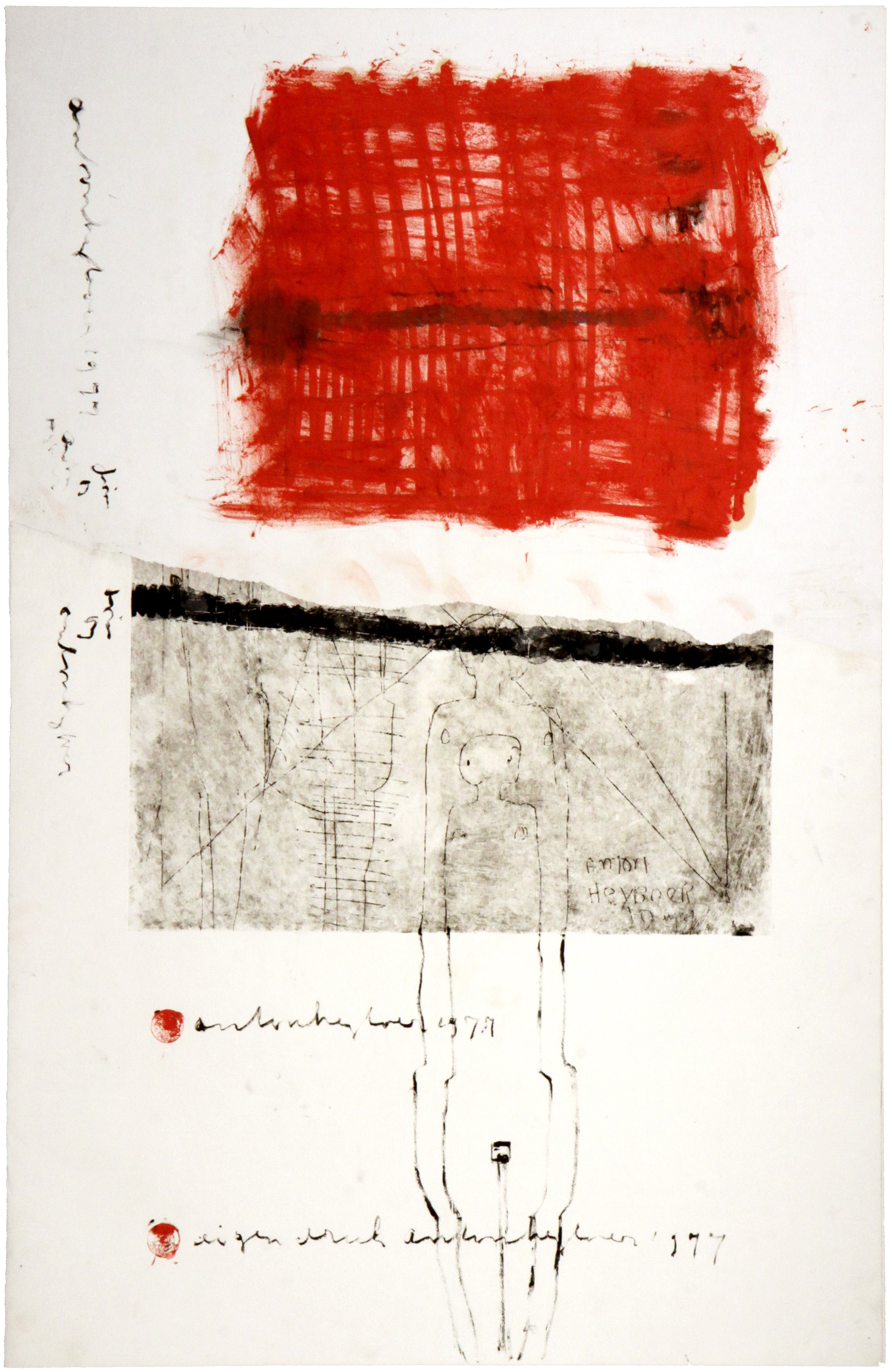
Heyboer was born in Sabang (Dutch East Indies) in 1924, but grew up mainly in the Netherlands. He trained as a mechanical engineer and during the Second World War was forced by the German occupiers to work in a transit camp in Berlin, from which he managed to escape. As a result of his war trauma, he was temporarily admitted to the psychiatric institution in Santpoort in 1951. There he discovered the healing power of art. In the 1950s and 1960s, he produced his first successful works: large sheets of simple graphic works and gouaches. Later, he used matchsticks to draw and also began painting and sculpting. From 1961 onwards, he lived in Den Ilp in the Dutch province of North Holland with his wife Maria, and later with five women he called his 'brides': Lotti, Marike, Joke, and Petra. With these women, he wanted to break away from society, from 'how things should be' according to your upbringing and background.
A glimpse into his life
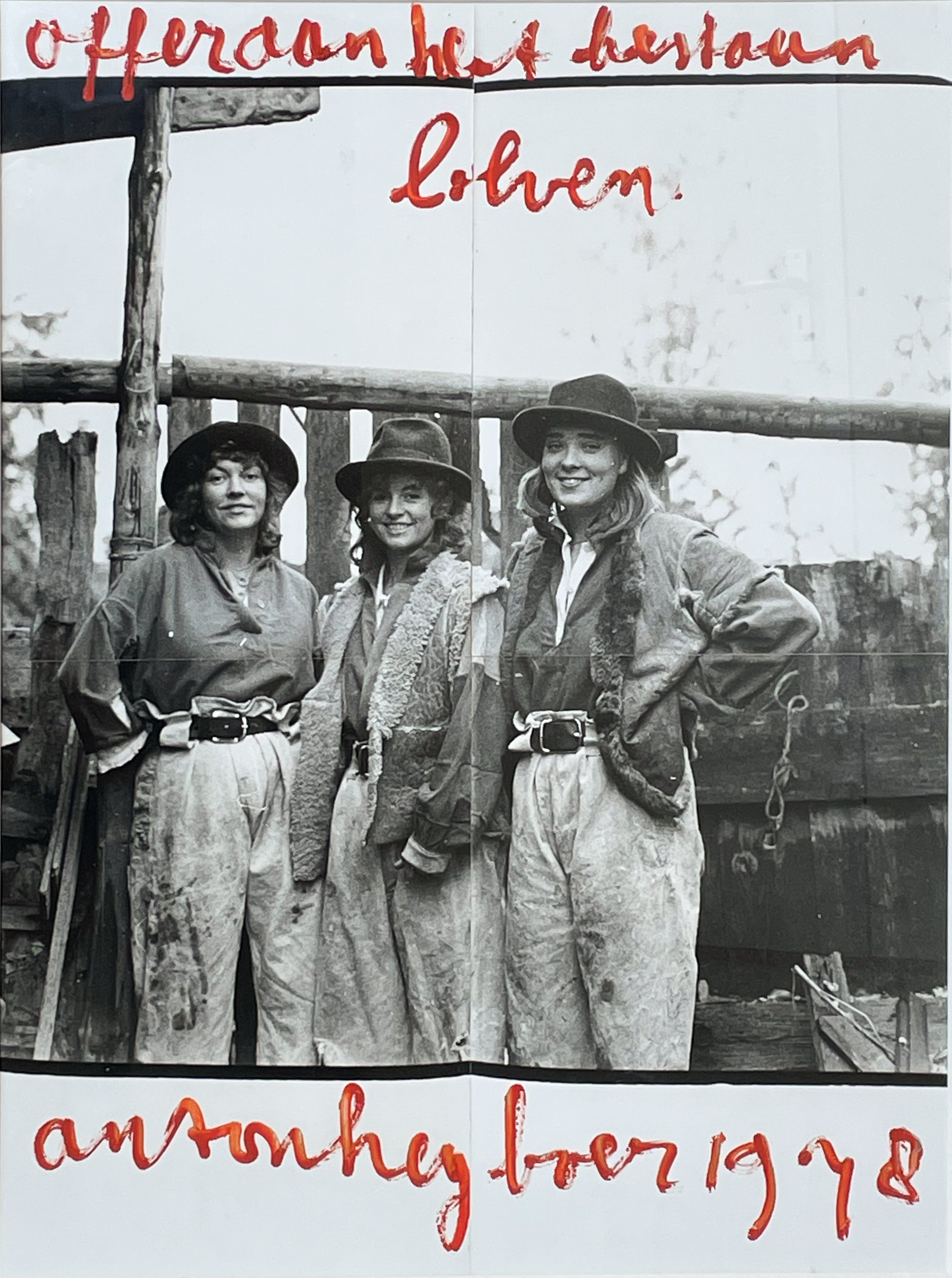
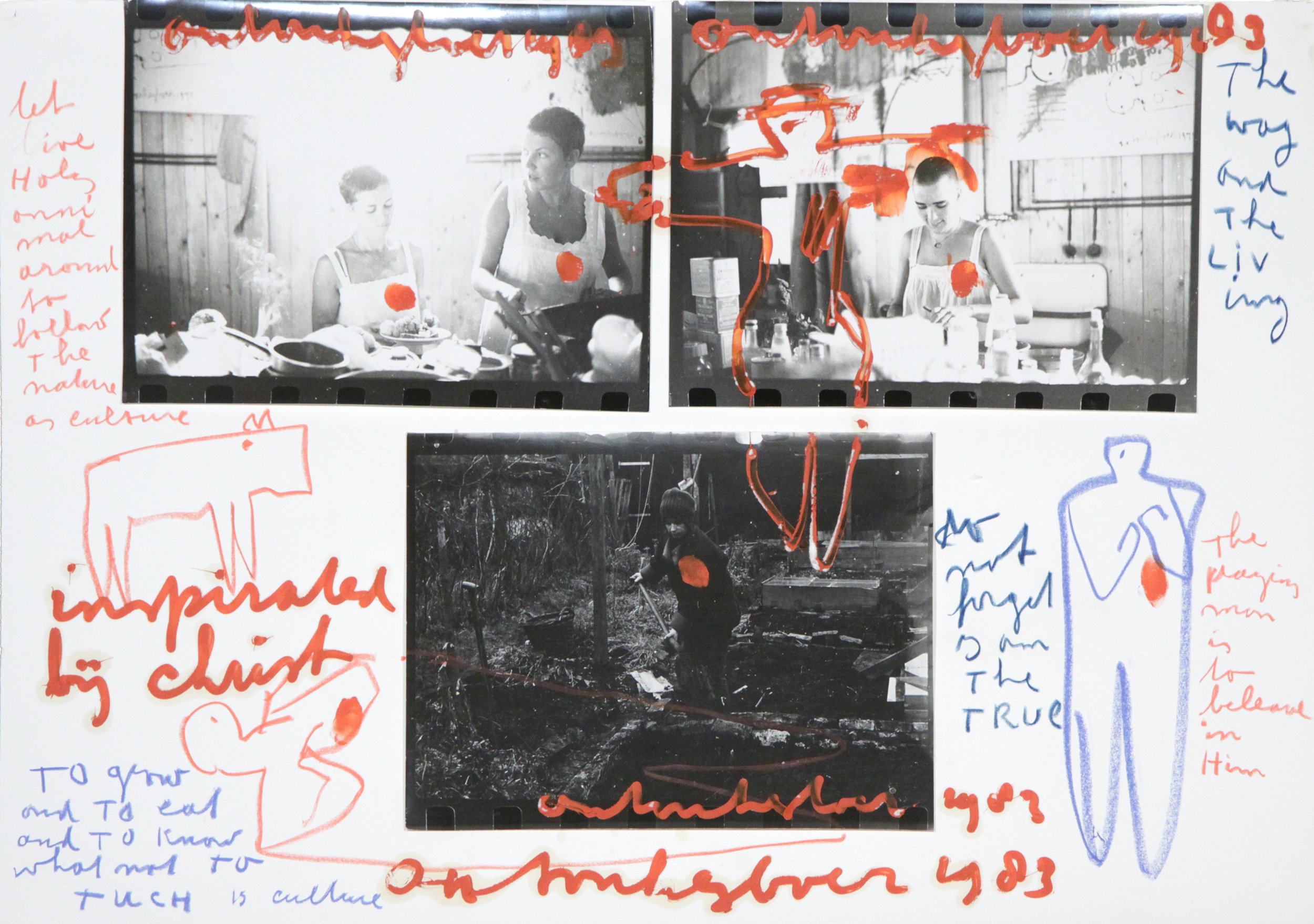
In Den Ilp, he built up an impressive oeuvre of tens of thousands of works of art. His brides took care of selling his work and photographed their life in Den Ilp under Heyboer's watchful eye. Occasionally, he used the camera himself. He turned these photos into collages, which offer a glimpse into their extraordinary life. On the marshy land, they lived in windowless barns, converted with scrap wood – "I look for the black to see how light things are" – and embedded car wrecks. The house grew organically with their lives and was shared with dozens of dogs, cats, goats, chickens, and marmots. Everything was built with materials that had lived a life, and they all wore second-hand or work clothes. Heyboer became world famous and his work sold well – but that fame stood in the way of his freedom. He repainted his works in order to be free again. He didn't want to own anything that might arouse envy. "My life is art, and I don't make art." He died in Den Ilp in 2005.
Museum JAN (founded in 1991) had a special connection with Heyboer; after his death, it organized several exhibitions in close collaboration with the artist and his wives (in 2004, 2008, and 2009). Heyboer donated some 18 clay sculptures to the museum, which also owns the monumental painting De Drievuldigheid (The Trinity).

Photo by Marije Kuiper, from left to right: Lotti Heyboer, Willem de Winter, Marieke Uildriks, Jan Verschoor, Joke Heyboer.
In Anton Heyboer's exhibition, Museum JAN honors this close bond by telling this unique story. In collaboration with Lotti and Joke—who still live in Den Ilp—a selection has been made of photo collages that have never been shown before, alongside a series of etchings and plastics that have been incorporated into collages. The Leica and Hasselblad cameras – painted pink to prevent theft – from the brides' private collection will also be on display at Museum JAN this summer. The Museumhuis, part of Museum JAN, also displays Heyboer's work through the years.